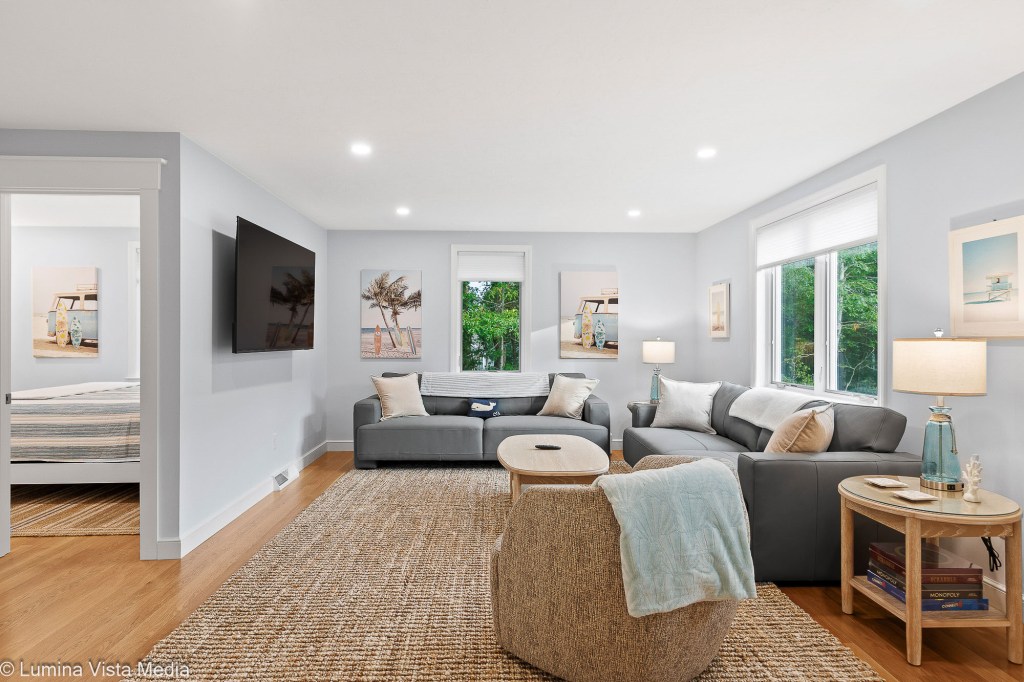
If you’re a realtor listing a property on Cape Cod, the photos attached to your MLS listing do more than fill space — they’re often the first and only impression a buyer forms before deciding whether to request a showing. Yet many agents still upload photos that don’t meet basic quality or technical standards, which can hurt how a listing performs and even how it displays across syndicated sites like Zillow and Realtor.com.
Resolution and file size matter. Most MLS systems in Massachusetts require images at a minimum resolution (often 1024 x 768 pixels or higher) and will compress or reject files that are too large or too small. Photos straight from a phone camera, especially in HEIC format, often need to be converted and resized before upload — a step professional photographers handle automatically.
Consistent lighting and white balance. MLS photos shot at different times of day, with mismatched lighting between rooms, make a listing feel disjointed. Professional real estate photography uses consistent exposure and color correction across every room, so the full set of photos reads as one cohesive tour rather than a scattered collection.
Order matters for buyer psychology. The first photo in an MLS listing is what shows up in search results and email alerts — it should be the strongest exterior or interior shot, not a random selection. A deliberate photo order (exterior, entryway, main living space, kitchen, bedrooms, bathrooms, outdoor space) guides buyers through the home the way an in-person showing would.
Wide-angle distortion is a real risk. Ultra-wide lenses can make rooms look larger than they are, which creates a mismatch when buyers walk through in person — and can even raise disclosure concerns in competitive markets. Professional real estate photographers balance wide-angle coverage with realistic proportions.
Drone and aerial shots need FAA certification. Any aerial photography used for a commercial listing legally requires the photographer to hold an FAA Part 107 certification. Using an uncertified drone operator — including a well-meaning friend or the listing agent’s own drone — creates liability for both the agent and the brokerage.
For Cape Cod listings specifically, aerial photos showing proximity to the water, beach access, or a property’s setting within its neighborhood can meaningfully boost buyer interest — something ground-level photos alone can’t capture.
Working with a professional, MLS-experienced photographer takes these technical requirements off your plate, so you can focus on the listing itself rather than troubleshooting upload errors or re-shooting photos that didn’t meet spec the first time.
Ready to upgrade your listing photos? Book a shoot with Lumina Vista Media — serving Falmouth, Chatham, Dennis, Sandwich, Barnstable, and surrounding Cape Cod towns.


Leave a Reply